
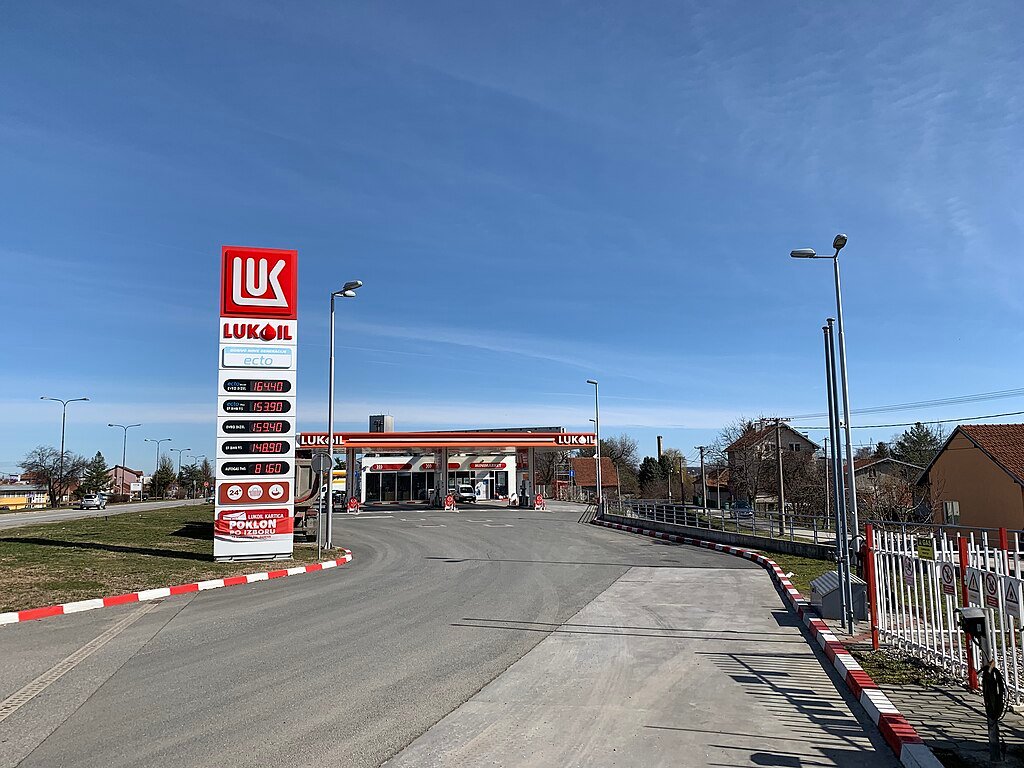
Saudi Arabian energy investment company Midar Energy has signed a memorandum of understanding expressing its intention to acquire Lukoil’s international assets, according to people familiar with the matter cited by Reuters.
Sources say the memorandum was signed earlier this year and covers Lukoil’s operations outside Russia that may be offered for sale as the company reassesses its global footprint. Midar Energy has reportedly placed funds into an escrow account while awaiting regulatory approvals, including potential clearance from U.S. authorities. The size of the deposit has not been disclosed.
One source described the memorandum as a strategically significant step, adding that Midar is actively working to ensure full compliance with regulatory and sanctions-related requirements. Neither company has publicly commented on the reported agreement.
Who Is Midar Energy?
Midar Energy was founded in the 1990s as a private Saudi investment company focused on the energy sector. Over the past three decades, it has built a diversified portfolio covering exploration, production, refining, and long-term energy investments across the Middle East, North Africa, and the Caspian region.
The company is part of Midar Holding, which in turn belongs to Al Fozan Holding, one of Saudi Arabia’s largest diversified business groups. Midar Energy employs roughly 1,000 people and operates offices in Jeddah, Riyadh, and the Netherlands.
Among its notable deals is a long-term exploration and production contract signed with Algeria’s state energy company Sonatrach, valued at more than $5 billion, as well as earlier involvement in Caspian Sea oil development projects.
Lukoil’s Global Business Footprint
Lukoil is one of Russia’s largest privately owned energy companies, with upstream and downstream operations spanning Europe, the Middle East, Africa, and Asia. Outside Russia, Lukoil has historically owned or held stakes in:
- Oil fields in Iraq and Central Asia
- Refineries and fuel retail networks in Eastern and Southern Europe
- Trading and shipping operations tied to global crude markets
International assets have long been a key pillar of Lukoil’s diversification strategy, allowing it to balance domestic production with global exposure.
Sanctions and Their Impact on Lukoil
Since 2022, Western sanctions targeting Russia’s energy sector have dramatically altered the operating environment for Russian oil companies. While Lukoil itself has not been sanctioned as comprehensively as some state-owned firms, many of its subsidiaries and partners face restrictions related to:
- Financing and access to Western capital markets
- Technology exports for upstream projects
- Insurance and shipping services
These constraints have made it harder for Russian companies to maintain and expand overseas operations, increasing pressure to sell or restructure foreign assets.
For potential buyers such as Midar Energy, any transaction involving Russian-linked assets must undergo rigorous compliance checks to ensure adherence to U.S., EU, and UK sanctions regimes.
Why the Deal Could Make Sense
For Lukoil, divesting international assets could provide liquidity, reduce regulatory risk, and simplify operations during a period of geopolitical uncertainty.
For Midar Energy, acquiring established oil and gas assets abroad would offer:
- Immediate production capacity
- Geographic diversification
- Long-term revenue streams
Such a move would also align with Saudi Arabia’s broader strategy of expanding the global footprint of its private energy sector.
Interesting Facts
- Lukoil was founded in 1991 during the breakup of the Soviet Union.
- Saudi Arabia remains the world’s largest crude oil exporter.
- Global mergers and acquisitions in the energy sector exceeded $250 billion in several recent years, driven largely by consolidation and energy transition strategies.
- Escrow accounts are commonly used in cross-border energy deals to protect both buyer and seller while regulatory approvals are pending.
A Deal to Watch
If finalized, the potential acquisition of Lukoil’s international assets by Midar Energy would rank among the most significant cross-border energy transactions involving Russian-linked assets since the start of Western sanctions. It would also highlight how Middle Eastern investors are increasingly stepping in to fill gaps left by Western companies scaling back from politically sensitive markets.
Featured image – Vanjakom, CC BY-SA 4.0 https://creativecommons.org/licenses/by-sa/4.0, via Wikimedia Commons