
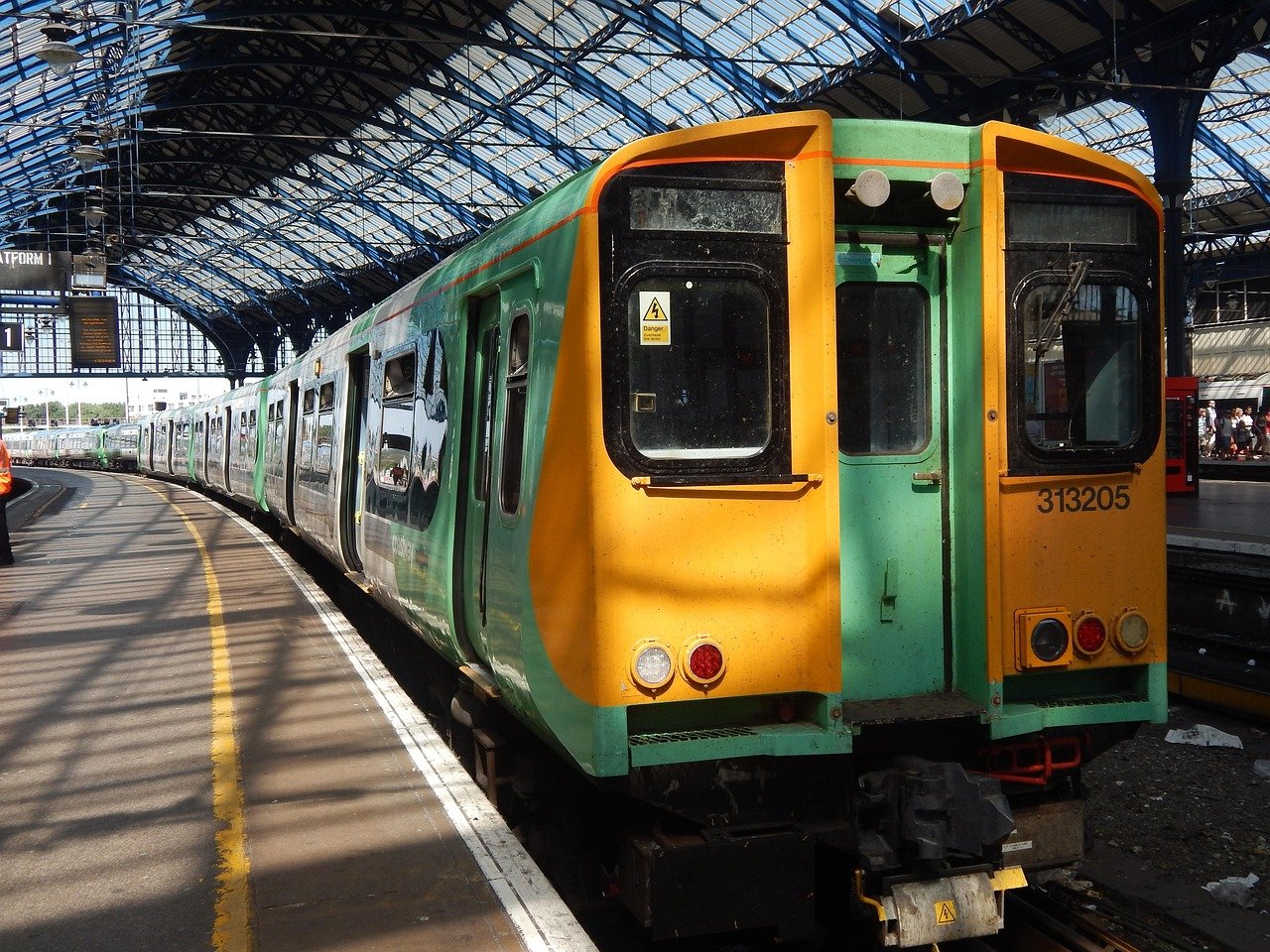
The United Kingdom has officially introduced its first passenger battery-powered train, capable of ultra-fast charging, marking a major breakthrough in rail transport technology. According to reports, the train will begin carrying passengers this weekend on a short but strategically important route in West London.
The five-kilometer line runs between West Ealing and Greenford, includes four stops, and serves up to 273 passengers per journey. While modest in length, the route acts as a real-world testing ground for what could become a transformative technology for railways across the country.
Ultra-Fast Charging Without Overhead Lines
What sets this train apart is its charging speed. The battery can be recharged in just three and a half minutes at West Ealing station between services. This is made possible by a 2,000 kW charging system that activates automatically only when the train stops precisely above it.
Crucially, the system eliminates the need for overhead power lines or a third rail. This makes the technology particularly attractive for routes where electrification is expensive, visually intrusive, or technically difficult.
Record-Breaking Battery Performance
The train has already demonstrated its long-range capability, traveling over 200 miles on a single charge. Last year, it set a world record for the longest distance covered by a battery-powered electric train, surpassing a previous German record established in 2021.
This achievement highlights how rapidly battery energy density and efficiency have improved—one of the key factors enabling rail operators to seriously consider battery-powered alternatives to diesel.
A Turning Point for Rail Technology
“This is a significant moment for everyone involved in this innovative project,” said Simon Green, Engineering Director at GWR. “Our trials show that batteries provide a reliable alternative where traditional electrification is not feasible or desirable.”
Network Rail’s Marcus Jones added that the technology represents “an important milestone for the rail industry” and will play a key role in achieving low-emission rail transport and the UK’s ambition of net-zero emissions by 2050.
The Future of Battery-Powered Trains
Battery-powered trains are increasingly seen as a bridge technology between diesel and full electrification. They offer:
- Lower infrastructure costs
- Reduced carbon emissions
- Quieter operation
- Faster deployment on existing lines
Rail operators believe the technology could soon support longer regional routes, particularly in southwest England and other areas where electrification has historically lagged behind.
Interesting Facts About Modern Train Technology
- A battery train emits up to 70% less CO₂ than diesel alternatives
- Regenerative braking allows trains to recharge while slowing down
- Some next-generation designs combine batteries with hydrogen fuel cells
- Rail transport already accounts for less than 1% of UK transport emissions, making it one of the cleanest mass transit options
Why This Matters
Railways are among the hardest sectors to fully decarbonize due to infrastructure complexity. Battery-powered trains offer a practical, scalable solution that can be implemented quickly—without waiting decades for full electrification.
As battery costs continue to fall and performance improves, this technology could redefine rail travel not just in the UK, but globally.
Image by Tim Bigger from Pixabay