
Last Updated on November 28, 2025
After investing more than €3 billion, it is expected the first batteries from Volkswagen’s EV battery plant in Spain to roll off the production lines in 2026, marking one of the largest industrial investments in the country’s modern history.
Three years ago, the German automaker pledged over €10 billion to transform Spain into a key hub for electric vehicle manufacturing. The centerpiece of that strategy is a new battery plant in Sagunto, near Valencia, built by PowerCo — Volkswagen’s dedicated battery subsidiary. What was once orange farmland has now been replaced by enormous white production halls, railway connections, and testing facilities preparing for Europe’s next generation of electric mobility.
Construction of the factory is ahead of schedule. According to PowerCo’s finance chief Javier Rivera, the first industrial columns were built just a year ago. Today, the site is already preparing to manufacture its first battery cells by September 2026, with cells destined for electric vehicles assembled in Martorell and Landaben from 2027 onward.
A Gigafactory That Will Power Half a Million EVs Each Year
The first production unit will have an annual capacity of 10 GWh, generating about 55,000 battery cells per day — enough to supply between 450 and 550 electric cars daily. A typical electric vehicle uses between 100 and 120 battery cells.
Plans include four production blocks with a combined capacity of 40 GWh, which can later expand to 60 GWh if demand continues rising. At full scale, the factory will be capable of producing batteries for nearly 500,000 electric vehicles annually, equivalent to about a quarter of Spain’s total car production.
The second factory module will become operational in 2027, while the second phase in 2028 will increase employment from 1,600 to over 3,000 workers. Around 1,400 people are already working on-site today, with an additional 500 hires planned in 2026.
Europe’s Battery Arms Race
Volkswagen’s investment places Spain at the center of Europe’s rapidly expanding battery industry. Across the EU, over €100 billion worth of gigafactory projects are currently under construction or announced, from Germany to Hungary and France to Sweden.
The EU aims to supply at least 90% of its battery demand domestically by 2030, reducing reliance on Asian manufacturers. Europe currently produces less than 20% of the batteries it consumes — a strategic vulnerability Brussels has pledged to eliminate.
Battery manufacturing is now considered as critical as oil refineries were in the 20th century. Without batteries, there are no electric cars — and without electric cars, the EU’s ban on combustion engine vehicles after 2035 becomes meaningless.
Volkswagen’s EV Battery Plant for the Technologies of Tomorrow
Initially, the factory will produce LFP lithium-iron-phosphate batteries, which are cheaper and highly durable, though they offer slightly lower energy density than lithium-nickel cells. LFP batteries are ideal for affordable city cars and entry-level electric vehicles.
The production lines are also designed for future upgrades and can later manufacture solid-state or sodium-ion batteries, which promise longer range, faster charging and higher safety — and are seen as the next technological breakthrough.
Inside the buildings, production occurs in ultra-clean “dry rooms” with humidity below 1% and stable temperatures of 21°C. Each production block contains 17 such rooms — covering an area equivalent to eight football fields.
Electric Cars Under €25,000 Are Coming
Batteries from Sagunto will supply Volkswagen’s upcoming affordable electric lineup including:
- VW ID.Polo
- ID.Cross
- Cupra Raval
- Skoda Epiq
All are expected to start under €25,000, making electric vehicles accessible to mass-market buyers for the first time in southern Europe.
Battery cells will be transported by rail to vehicle plants, reinforcing Volkswagen’s low-carbon supply chain.
Europe’s Electric Car Boom: Interesting Facts
- EV sales in the EU surpassed 3 million units in 2024.
- Batteries now account for up to 40% of a car’s total cost.
- In 2010, lithium-ion battery prices exceeded $1,100 per kWh. Today they are below $100 per kWh.
- A modern EV battery pack contains raw materials sourced from four continents.
- Europe has overtaken the US in battery capacity growth and is catching up rapidly with China.
Final Outlook
Volkswagen’s EV battery plant in Spain is not just a factory — it is a cornerstone of Europe’s industrial re-shoring strategy in the electric age. With strategic investment, local employment, next-generation technology and mass-market electric models, the Sagunto plant symbolizes Europe’s attempt to reclaim its leadership in automotive manufacturing.
If the project meets its goals, Spain will not only build cars — it will power them.
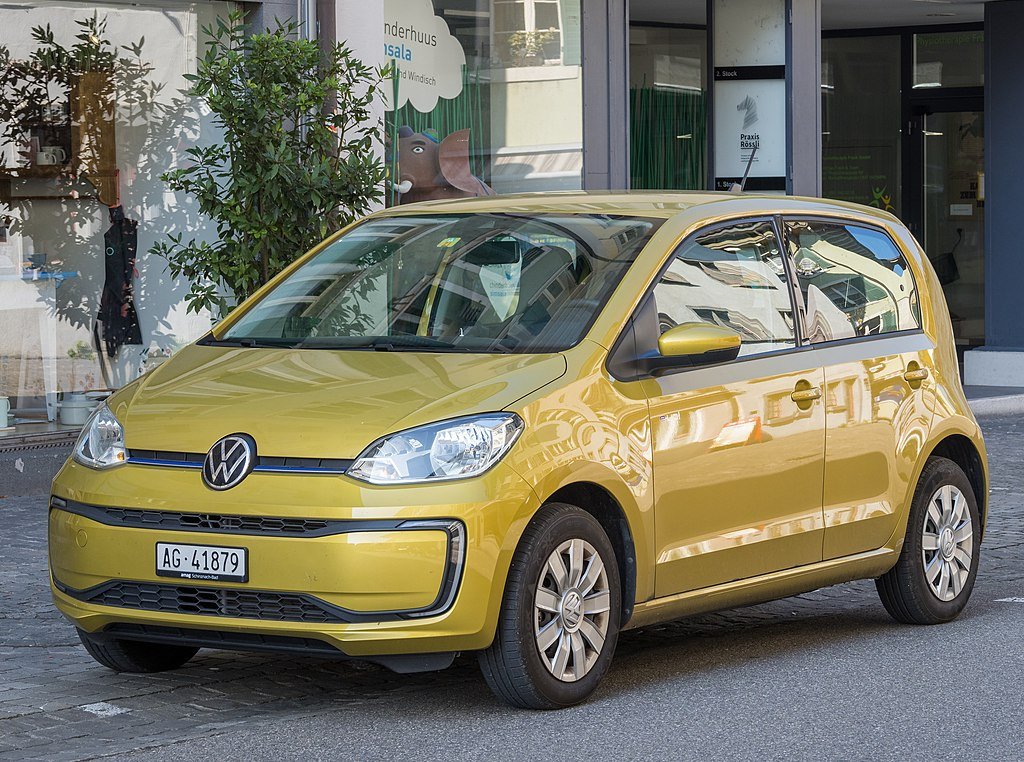
Featured image by JoachimKohler-HB, CC BY-SA 4.0 https://creativecommons.org/licenses/by-sa/4.0, via Wikimedia Commons